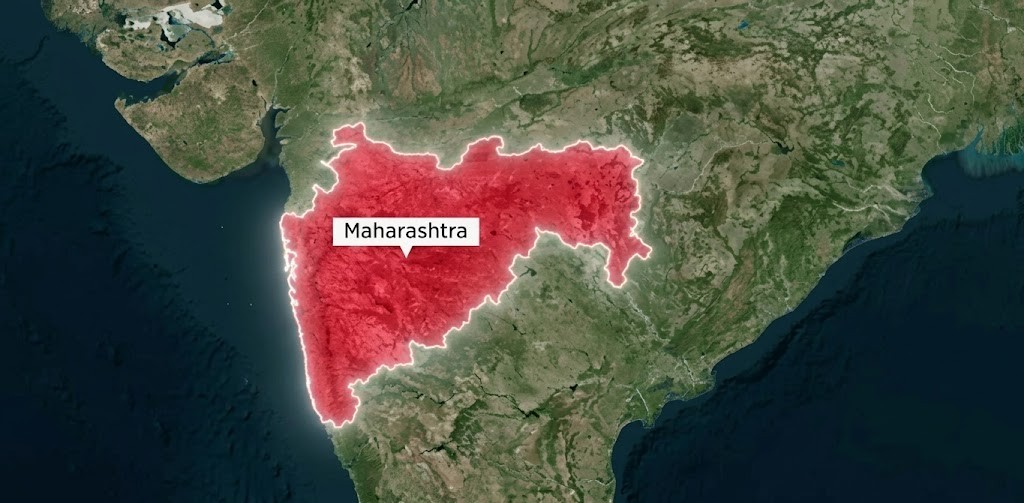
Maharashtra’s MahaAgri-AI Policy 2025–2029 – described as India’s first comprehensive, dedicated AI policy for agriculture – is a useful reference point precisely because it’s explicit about all four of these components rather than leaving them implicit.
1. Governance and institutions
The policy establishes a State-Level Steering Committee (SLSC) for high-level approvals and coordination, alongside a State-Level Technical Committee (SLTC) and a dedicated AI and Agritech Innovation Centre. That’s a meaningfully different structure from a pilot that reports informally to whichever department happened to sponsor it.
2. Funding and phased roadmap
The policy commits ₹500 crore to implementation across a defined 2025–2029 period, with a phased rollout rather than a single funding announcement – explicitly moving, in the state’s own framing, from district-wise pilot projects to statewide deployment of farmer-centric solutions.
3. Technology pillars
The policy names specific technology categories in scope – Generative AI, drones, computer vision, robotics, predictive analytics, and IoT – deployed across the agriculture value chain, alongside a shared Digital Public Infrastructure layer intended to provide a common, secure data backbone rather than a separate data model per technology pillar.
4. Farmer-centric safeguards and outcomes
The policy frames its goals explicitly around farmer outcomes – productivity, resilience, market access, and rural incomes – rather than technology adoption as an end in itself, which shapes how individual projects under the policy get evaluated and prioritised.
WHY THE INSTITUTIONAL LAYER MATTERS MORE THAN THE TECHNOLOGY LIST Almost any state could write a list of AI technologies worth adopting in agriculture – GenAI, computer vision, and IoT are not controversial choices. What’s actually hard, and what a dedicated policy forces a state to resolve upfront, is who has authority to approve projects, where the multi-year budget sits, and how a pilot’s success gets evaluated before more money follows it. That institutional layer is the part ad-hoc pilots almost never have. |
What happens when a policy doesn’t specify data governance
A technology pillar list without an explicit data governance framework tends to produce a subtler version of the same fragmentation problem a dedicated policy is meant to solve. If a drone initiative, a computer-vision pest detection project, and a predictive analytics advisory tool are each procured under the same policy umbrella but with different vendors and no shared data standard, a state can end up with three well-funded AI projects that still can’t share data with each other – the coordination problem simply moves from the pilot level to the vendor level, rather than disappearing.
This is precisely why Maharashtra’s policy frames its Digital Public Infrastructure layer as foundational rather than as one technology pillar among several – it’s meant to be the shared substrate every other pillar builds on, not a parallel initiative competing with drones or computer vision for the same budget line.
The national context this sits inside
State-level agriculture AI policy isn’t happening in isolation from national programmes. India’s Digital Agriculture Mission, the national Agristack (working toward 11 crore Farmer IDs by 2026–27, with over 7.6 crore already generated), and the Union Budget’s proposed Bharat-VISTAAR – a multilingual AI advisory tool integrating Agristack data with ICAR’s agricultural practice guidance – are all building shared national infrastructure that a state-level AI policy needs to plug into, not duplicate. A state without its own coordinated policy risks either building redundant infrastructure or struggling to absorb central schemes coherently across departments that don’t share a common data architecture. The broader India AI Mission’s emphasis on inclusive, human-centric AI adoption gives states a national framing to align with, but alignment still has to be built deliberately at the state level – it doesn’t happen automatically just because a national mission exists.
Other states are moving, even without a named policy yet
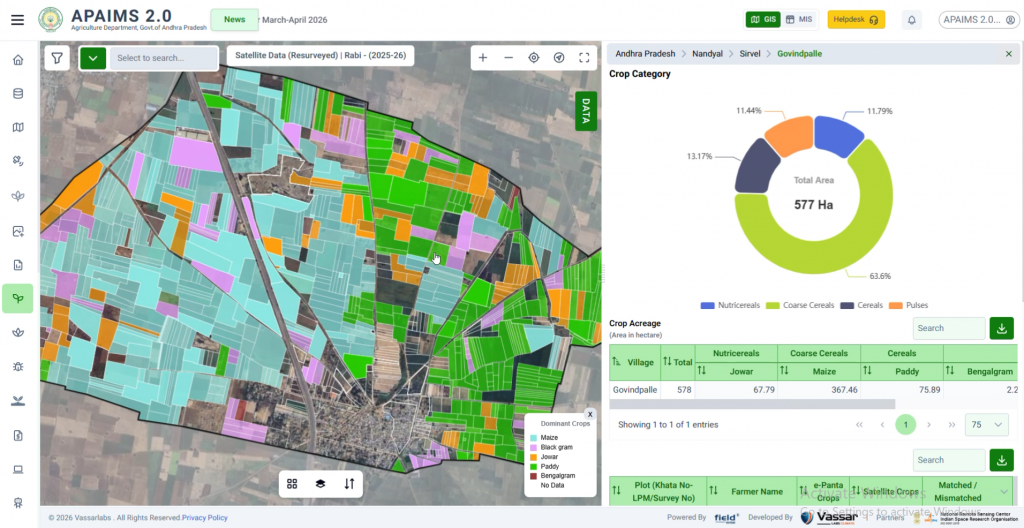
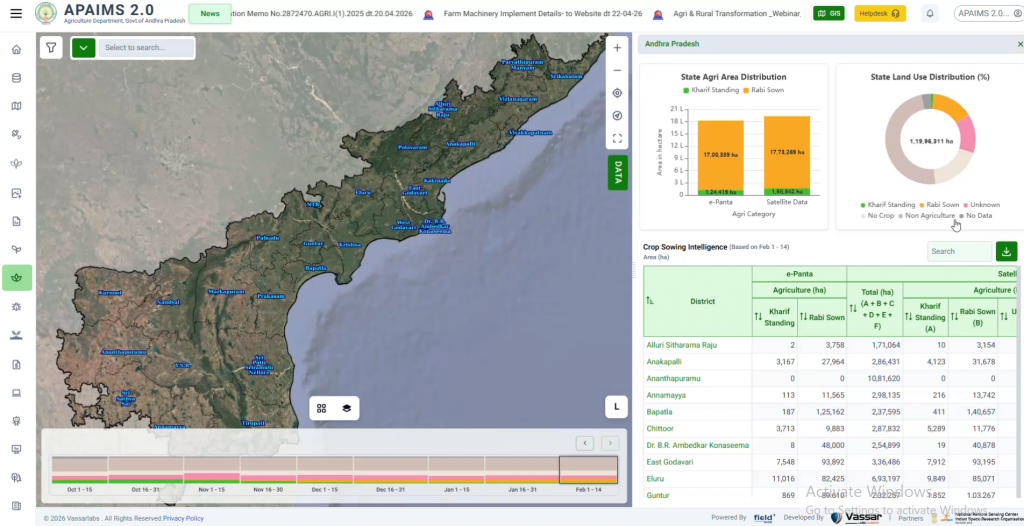
Andhra Pradesh offers a useful contrast: rather than a single named AI policy document, the state has built AI capability incrementally through APAIMS’s continuous evolution, a Memorandum of Understanding with Google on AI, cloud, and digital governance cooperation, and a separate MoU with the Wadhwani Foundation specifically on AI for agricultural data verification. That’s real, substantive progress – but it’s also a useful illustration of the fragmentation risk discussed above: each of those initiatives currently has its own institutional home, and consolidating them under a single governance and funding framework, as Maharashtra has done, is a distinct and additional step beyond running the initiatives themselves.
What states drafting a policy should prioritise
- Name a single accountable governance body – modelled on Maharashtra’s steering and technical committee structure – rather than leaving AI initiatives distributed across departments with no shared coordination point.
- Commit multi-year funding with phases, not a single-year allocation, since agriculture AI capability genuinely takes several seasons to validate and scale.
- Build on shared Digital Public Infrastructure rather than letting each technology pillar (drones, advisory, credit scoring) run on its own separate data model.
- State farmer outcomes explicitly, not just technology adoption targets, so individual projects can be evaluated against something more meaningful than whether the pilot technically worked.
- Plan for cross-department data sharing from the start – agriculture, revenue, and rural development departments all touch farmer data, and a policy that doesn’t address this upfront tends to rediscover the problem later, project by project.
Frequently asked questions
Is Maharashtra’s MahaAgri-AI Policy the only one of its kind in India?
It’s widely described as India’s first comprehensive, dedicated state-level AI policy specifically for agriculture. Other states have substantial AI activity in agriculture, but as of this writing haven’t consolidated it into a single named policy document with the same governance and funding structure.
Does a state need a formal policy before it can fund any AI agriculture projects?
No – states can and do fund individual AI agriculture projects without a dedicated policy, as Andhra Pradesh’s ongoing initiatives show. A formal policy isn’t a prerequisite for action; it’s a mechanism for coordinating and scaling actions that would otherwise stay fragmented.
How does a state agriculture AI policy relate to the national Digital Agriculture Mission?
A well-designed state policy builds on top of national infrastructure – the Agristack registry layer, the Digital Crop Survey, national data standards – rather than duplicating it, using the state layer to fund and coordinate the specific technology deployments and farmer-facing services that sit on top of that shared national foundation.
What happens to AI pilots in states without a dedicated policy?
They don’t necessarily fail, but they’re structurally more exposed to discontinuity – a change in the sponsoring department’s leadership, a funding cycle ending, or a vendor relationship not being renewed can end a pilot regardless of how well it performed, precisely because there’s no institutional structure committed to carrying it forward.
Should a state agriculture AI policy be written by the agriculture department alone?
Given how much these policies depend on shared data infrastructure and cross-department coordination, most effective policies involve the state’s IT/e-governance department and finance department from the drafting stage, not just the agriculture department – since governance, budget, and data-sharing decisions all cut across departmental lines.
Further reading
Government of Maharashtra, Department of Agriculture – MahaAgri-AI Policy 2025–2029: https://agritech.tnau.ac.in/pdf
Related on this blog: What Is Digital Public Infrastructure for Agriculture? · Case Study: How Andhra Pradesh Built APAIMS