Common misconceptions about agriculture DPI
“DPI just means it’s built by the government”
Not quite. Several agriculture DPIs – including state platforms – are built and operated by private technology partners. What makes something DPI isn’t who builds it, but whether it’s built on open, interoperable standards the state actually controls, rather than a closed system only the vendor can modify.
“DPI means one single national app”
The opposite is usually true. DPI is designed so multiple apps and services can exist on top of the same shared data layer – a state advisory app, a private insurance app, and a bank’s credit app can all draw on the same verified farmer and crop registry without needing to be the same product.
“Once it’s built, it runs itself”
An agriculture DPI is closer to a utility than a one-time software delivery. Registries need continuous updating as land changes hands and crops rotate season to season, and governance rules for who can access what data need active management – this is covered in more depth in our piece on agri-DPI governance architecture.
“A bigger vendor automatically means a more open system”
Vendor scale and architectural openness are two separate questions. A large, well-known technology provider can still deliver a closed, proprietary system, while a smaller specialist partner can deliver something built entirely on open standards. The only reliable way to tell the difference is to look directly at the data model and the contract terms – not the vendor’s size or brand recognition.
Where this is already running
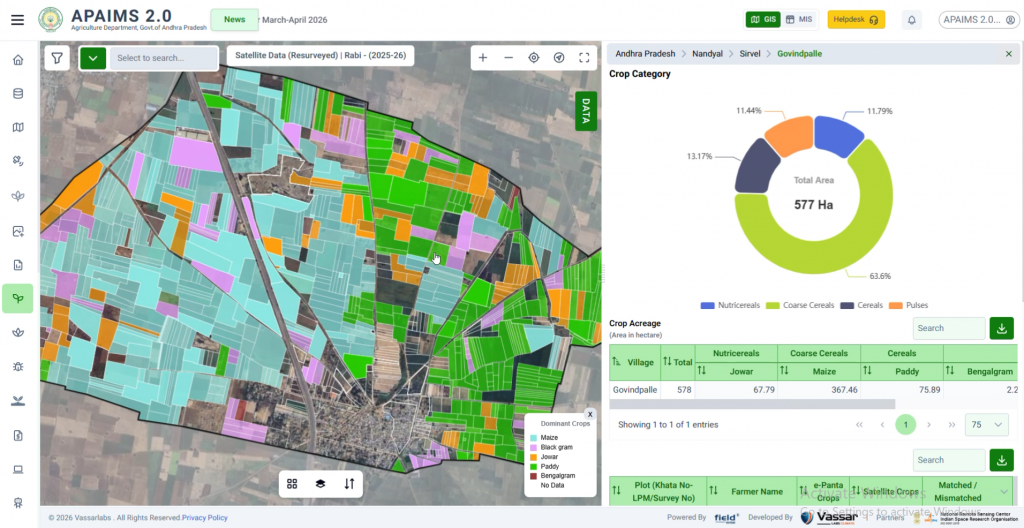
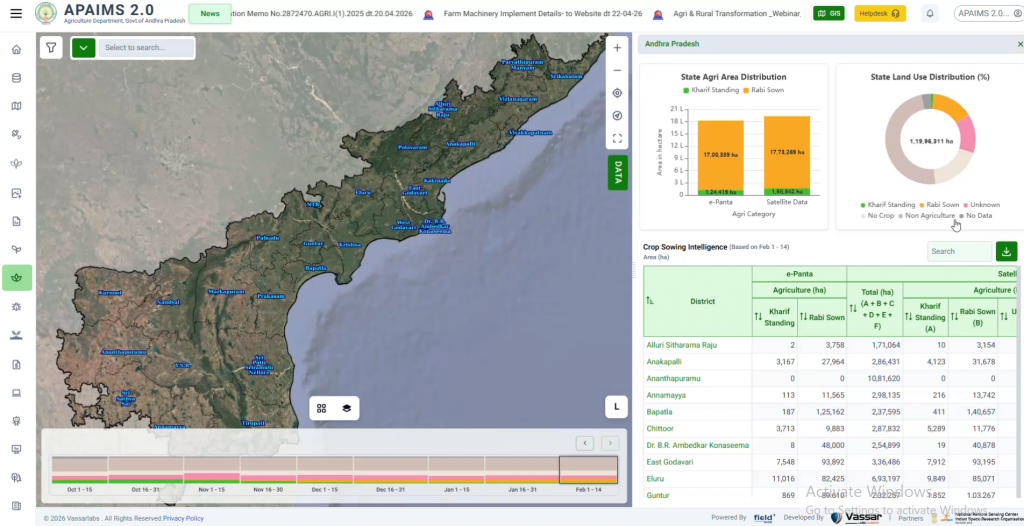
India’s national Agristack is building the registry layer at population scale, while individual states are building their own service layers on top of it. Andhra Pradesh’s APAIMS and Kerala’s KATHIR are both examples of state-level platforms built on DPI principles – open architecture, verified registries, and services designed to interoperate rather than sit in isolation. Both are covered in more depth in our dedicated case study posts.
What a well-built agriculture DPI requires operationally
The technology stack is only part of the story. States that get real value from an agriculture DPI typically have three things in place alongside the software itself:
- Clear data governance – explicit rules for who owns which dataset, who can query it, and how disputes between departments or private partners get resolved.
- Field-level data quality – a registry is only a “single source of truth” if the underlying land and crop data was captured accurately in the first place.
- Institutional buy-in across departments – a DPI only delivers its full value once insurance, subsidy, and advisory systems are actually built to consume the shared data, rather than continuing to run in isolation.
The procurement implication
For a state government evaluating an agriculture technology partner, the DPI framing changes the questions worth asking. It’s less “does this app work well” and more: is the data model open? Can another vendor build on top of this without starting over? Does the state actually own its registry, or is it locked inside one company’s proprietary system? Those questions are the subject of our companion piece on writing an RFP for a state agriculture DPI.
In practice, this shows up most clearly at contract renewal time. A state that procured a closed system typically finds itself negotiating from a position of weakness – switching vendors means rebuilding the registry from scratch. A state that procured genuine DPI can credibly evaluate alternative vendors for new services, because the underlying data and standards were never proprietary to begin with.
Frequently asked questions
Is Digital Public Infrastructure the same as e-governance?
Not exactly. E-governance is a broad term for digitising government services generally. Digital Public Infrastructure is a more specific architectural approach – open, interoperable, population-scale – that can underpin e-governance efforts, but a digitised government service doesn’t automatically qualify as DPI unless it’s built to that standard.
Who owns the data in an agriculture DPI?
This depends on the specific governance model, but the design intent behind DPI is that the government – usually the state agriculture department – retains ownership and control of the core registry, even when a private company builds and operates the technology on the government’s behalf.
Does building an agriculture DPI mean starting from scratch?
Not necessarily. Many states already have land records, crop insurance data, and farmer databases in some form. Building an agriculture DPI is often more about re-architecting how existing data connects and interoperates than about collecting entirely new data from zero.
How is this different from India’s national Agristack?
The national Agristack focuses on building foundational registries – farmer identity, land, and crop data – at the country level. A state agriculture DPI typically builds its own service delivery layer on top of that foundation, tailored to the state’s specific schemes, crops, and departments.
Further reading
Government of India, Cabinet approval of the Digital Agriculture Mission – Press Information Bureau: https://www.pib.gov.in/PressReleasePage.aspx?PRID=2050966
Related on this blog: Case Study: How Andhra Pradesh Built APAIMS