The Future of Fertilizer Distribution: From Supply-Driven to Need-Based

Explore how APAIMS 2.0 enables need-based distribution of subsidized Urea and DAP through digital workflows, helping farmers access the right fertilizer at the right time. When every kilogram of fertilizer sold is tied to a verified farm need, farmers stop guessing, retailers gain real-time demand visibility, and the soil stops paying the price. 

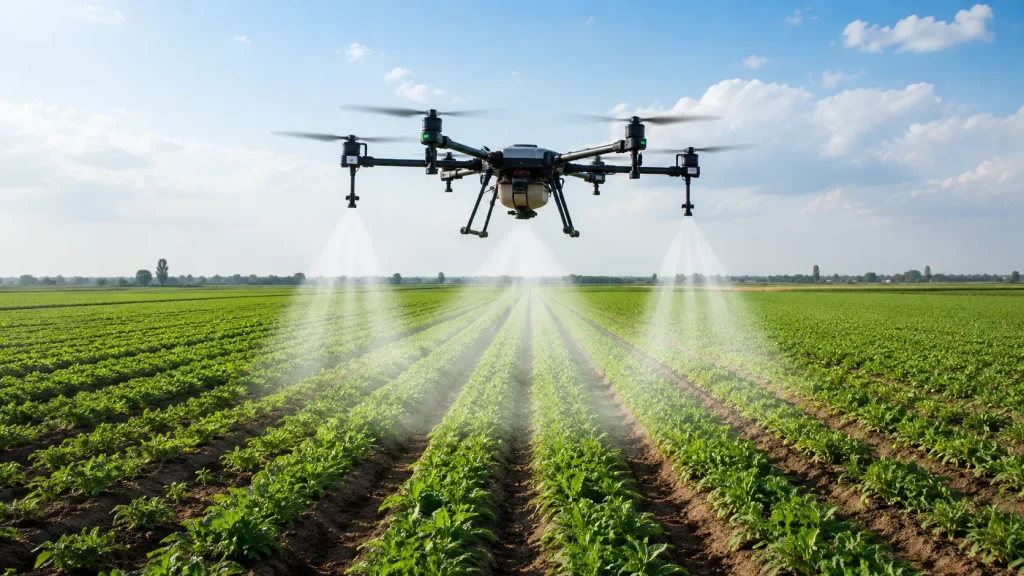
fertilizer spraying

For decades, the question a smallholder farmer in Andhra Pradesh asked at the start of every cropping season was not “how much fertilizer does my crop need?” It was “how much can I get?” Allocation was supply-driven, not demand-driven. A farmer who arrived early at the retailer outlet might walk away with more urea than her soil required. A farmer who arrived late might find shelves bare. Neither outcome was good – for the farmer, for the exchequer, or for the land. 

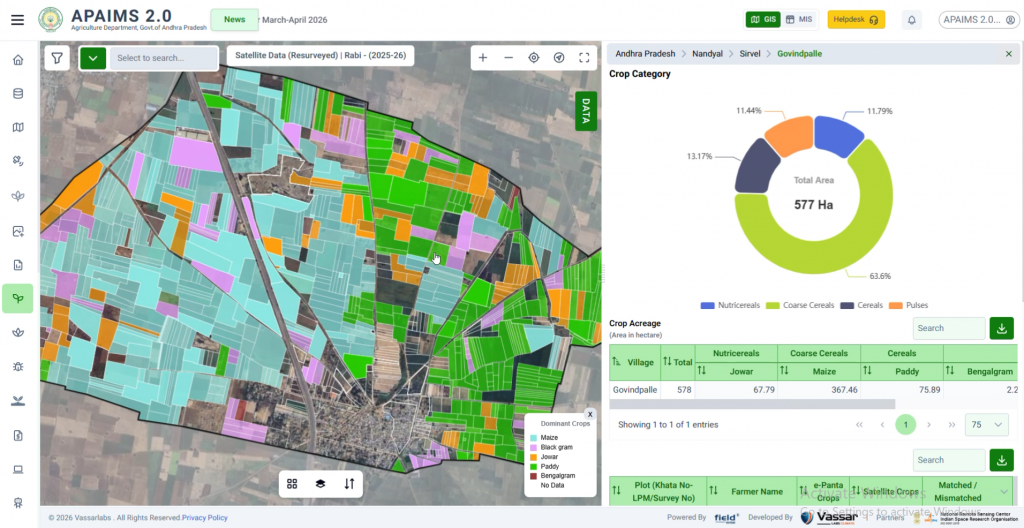
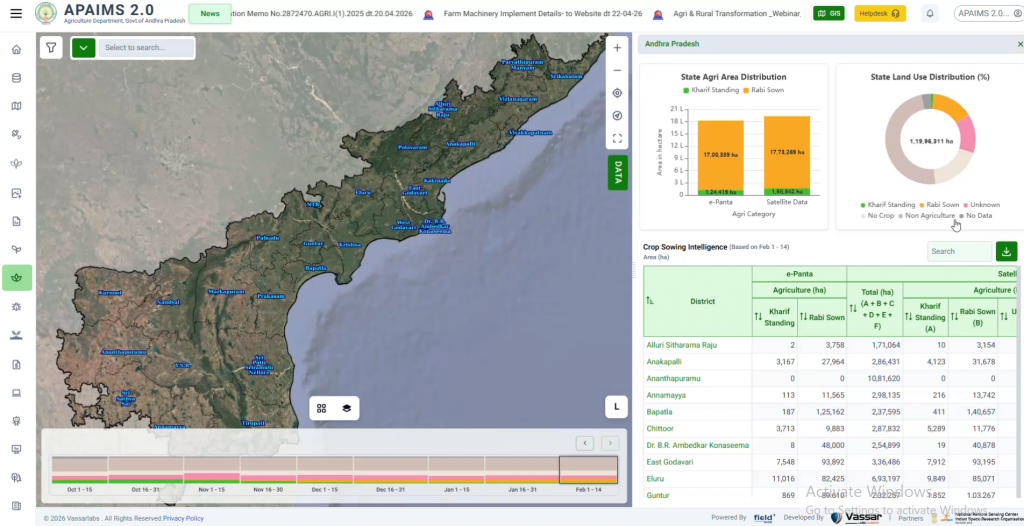
The fertilizer distribution module within APAIMS 2.0 – built by Vassar Labs for the Department of Agriculture, Government of Andhra Pradesh, is designed to close that gap entirely. It connects the cultivator’s verified land record and crop declaration to a fixed seasonal entitlement, links that entitlement to authenticated point-of-sale at the outlets, and gives senior officers a consolidated view of what has been distributed against declared crop and extent in their mandal. What follows is an account of how that connected chain works, and why it matters for farmers, for state governments, and for the environment. 


The Farmer’s Problem Was Never Just Price – It Was Certainty

Ask anyone who has worked a fertilizer season on the ground in Andhra Pradesh what the process looked like, and the answer is consistent: uncertainty on both sides of the counter. Farmers who could afford to over-purchase when stock was available often did, because there was no guarantee supply would still be there when the crop needed it. Retailers with limited real-time visibility into what had actually sold were over-stocked for the same reason. The result is a system that wastes fertilizer at one end, through misapplication, over-application, or diversion while creating artificial shortages at the other.

That uncertainty carries a real cost. Nitrogen applied in excess of crop demand does not improve yield, and the agronomic literature on excess nitrogen use is well established: it contributes to soil acidification, nitrate leaching into groundwater, and elevated nitrous oxide emissions. Genuine shortages at critical points in the season cause disproportionate yield loss for the opposite reason. Matching supply to actual, verified need addresses both failure modes at once.

The fundamental reform that need-based distribution enables is simple in concept: replace the question “how much stock is available?” with “how much does this farm, growing this crop, to this extent, actually require this season?” That requires two things that were previously unavailable together: a verified, plot-level record of what each cultivator is growing, and a distribution chain that can enforce entitlements at the point of sale. APAIMS 2.0’s fertilizer module provides both.

Under the conventional model, a retailer received a physical stock consignment and farmers drew against it at the retailer’s discretion. There was no systematic way to verify that a given transaction matched a genuine, declared agricultural need. APAIMS closes that loop by tying every sale to an authenticated identity and a system-calculated entitlement.


The Retailer and RSK as Nodes in a Verified Supply Chain

For the farmer experience to change, the infrastructure behind her has to change first. The retailer outlet, and in Andhra Pradesh, the Rythu Seva Kendra (RSK), is the physical node where policy becomes practice.

Every outlet, whether a private retailer, PACS or RSK, must hold a valid fertilizer license to sell through APAIMS. All retailers and PACS are first mapped to the RSKs and villages they serve, a step carried out through the RSK Assistant. Once mapped, a retailer or PACS can view only its mapped RSKs and villages, and can sell only to cultivators mapped to that outlet. This is a meaningful boundary worth stating plainly: an individual retailer does not get a state-wide or district-wide view of distribution.

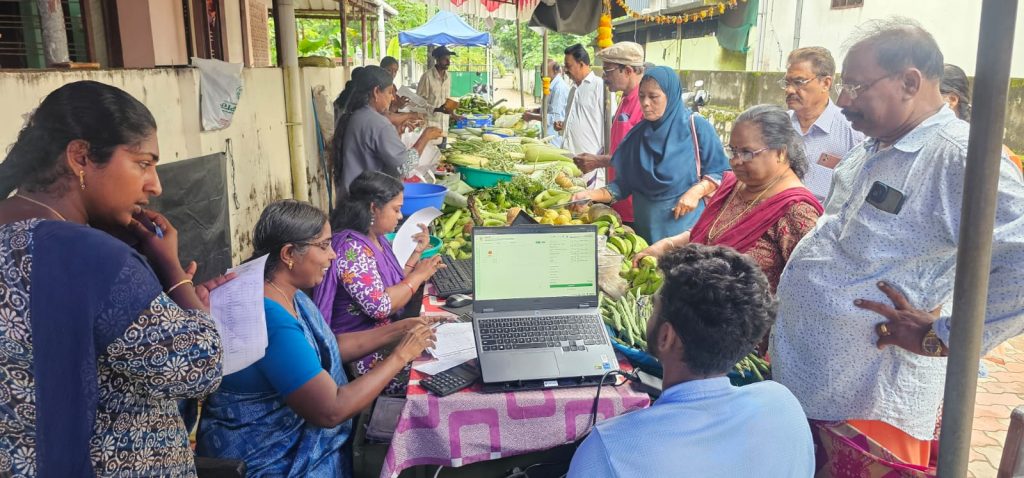
At the point of sale, the cultivator’s Aadhaar number is entered and OTP-authenticated. The system then displays land parcel details, crop details, and eligible quantity, and the sale itself is capped at that eligible quantity. The corresponding PoS transaction must also be completed using the same Aadhaar number, and APAIMS and PoS data are cross-verified, with discrepancies attracting action against the concerned parties. This authentication and cross-verification step ensures traceability of fertilizer stock at every step and eliminates the most common form of leakage: fertilizer sold to non-farmers, diverted to industrial use, or double-counted across multiple registrations.

Outlet licensing is also actively managed. Officers can suspend a license during enforcement action, recording the suspension period and reason. A suspended outlet cannot transact through APAIMS until the suspension period lapses or the suspension is revoked. This gives the department a working lever over bad-faith outlets that a purely paper-based system did not have.

MAO and District Oversight: Demand Visibility Before the Season Breaks Down

The Mandal Agriculture Officer is often the last line of institutional knowledge between policy intent and field reality. In the pre-digital model, building a picture of how fertilizer was moving in a mandal meant manually aggregating retailer registers, a process that took days and arrived too late to act on.

Within APAIMS, the MAO can view an outlet-wise sales abstract, period-wise Urea and DAP sales, and cultivator-wise transaction details, which together support stock verification against actual sales during inspections. RSK officers can similarly view the status of fertilizer distribution to farmers within their jurisdiction. Access extends upward to senior officers, consistent with the structure defined for the system.

This visibility changes the nature of field management. When an officer sees a village with unusually low uptake against declared crop area, or notices sales figures that look inconsistent with what a mandal’s crop mix would suggest, that pattern is visible in the sales abstract and transaction detail rather than buried in an end-of-season paper reconciliation. Anomalies (a retailer showing unusually high per-farmer sale volumes, a mandal showing entitlement draws significantly above crop-area norms, a district where carry-forward balances are accumulating) surface automatically rather than being buried in reports compiled at season’s end.

What the Farmer Actually Experiences: Confidence, Not Compromise

What does need-based distribution mean in practice for, say, a paddy farmer in Guntur district?

1. They are not forced to gamble on availability. Urea entitlement is calculated from their crop’s nitrogen dose recommendation, following the university dose recommendations. The APAIMS 2.0 farmer-facing application delivers all of this through a Telugu-language mobile interface with voice support, designed for accessibility across literacy levels.

If the total seasonal entitlement is 3 bags or less, they can draw it in one visit or across several. If it exceeds 3 bags, it is released in three splits, each equal to one-third of their entitlement or 3 bags, whichever is higher, so supply is paced across the season.

In case they cannot complete a purchase in one visit, only the remaining eligible balance is available on the next visit, but that balance does not disappear. DAP works differently: for major crops such as paddy, maize, cotton, chillies and groundnut among others, eligibility is calculated at one 50 kg bag/acre, and they can draw in one or multiple visits.

2. If their Aadhaar is not mapped to the outlet they visit, the system tells them with a clear error message directing back to the RSK. The RSK assistant has the authority to amend the crop and land details after proper verification.

3. If something does go wrong, whether a query about their entitlement or a dispute about records, a dedicated APAIMS Help Desk is available to staff and retailers.

None of this requires them to trust that stock will still be there when they need it. Their entitlement is theirs, calculated once for the season from their own crop and land, and released to them in a paced, verifiable way.

Fertilizer Efficiency and Ecological Dividend: The Case Beyond the Farm Gate

India’s fertilizer subsidy is one of the largest in the world, and it has historically rewarded volume over precision. The ecological consequences of chronic over-application are well documented in the agronomic literature: soil acidification, nitrate leaching into groundwater and surface water, and elevated nitrous oxide emissions, a greenhouse gas with a substantially higher warming potential than CO2 over a hundred-year horizon.

Need-based distribution is one of the more direct structural levers available to address this, precisely because it is enforced at the transaction rather than recommended in policy documents that field practice can drift away from. When entitlements are grounded in verified crop and extent data rather than an assumed district average, and the sale itself cannot exceed that entitlement, the system is structurally oriented toward matching what is dispensed to what was declared as needed. Whether that translates into a measured reduction in aggregate fertilizer applied is an outcome question, one that would need to be assessed against actual season-on-season distribution data rather than asserted from system design alone.

For water bodies, the underlying logic holds regardless: fertilizer that is not over-applied does not reach the watershed. Reduced nitrogen and phosphorus loading in surface runoff is associated with reduced eutrophication risk in reservoirs, rivers and irrigation canals, a well-established relationship in the agronomic and environmental literature.


Conclusion

The problem of fertilizer distribution in Indian agriculture has never been purely logistical. It has been a problem of information, the absence of a reliable connection between what a farm needs and what a supply chain delivers. The APAIMS 2.0 fertilizer module, built by Vassar Labs for the Department of Agriculture, demonstrates what becomes possible when that connection exists: entitlements grounded in verified farm data, authentication at the point of sale, and outlet and mandal-level visibility that keeps pace with a season rather than arriving after it.

For state agriculture departments evaluating next-generation distribution infrastructure, the operational lesson is straightforward: demand visibility and point-of-sale enforcement work best as one system rather than two separate initiatives. For farmers who have spent a career managing uncertainty, that system represents something more fundamental than administrative efficiency. It represents the confidence to plan around what their crop is entitled to, rather than what they could secure before the stock ran out.

To understand how the fieldWISE platform can be configured for fertilizer distribution, input quality assurance, or broader agricultural DPI at state scale, contact Vassar Labs at info@vassarlabs.com.


Know More About Vassar's Digital Public Infrastructure for Agriculture

Subscribe Us

Read Our Latest Articles on Climate Technology

Featured Posts

Get In Touch