India’s digital transformation over the past decade has demonstrated what shared digital infrastructure can unlock at scale. Platforms such as Aadhaar, UPI and DigiLocker have created common digital rails that enable governments, businesses and citizens to build and access services more seamlessly.
Agriculture now presents the next, and considerably more complex frontier for this approach. Unlike a single digital service, agriculture is an interconnected ecosystem spanning farmers, land, crops, weather, water, inputs, markets, finance and government programmes. Yet the data, systems and services supporting these elements often exist across fragmented platforms and institutions.
As climate variability increases and the need for precision, efficiency and inclusion grows, the next phase of agricultural transformation will require more than digitization. It will require interoperable infrastructure that connects data, intelligence and services around the farmer.
This was the central theme of Vassar Labs’ World Environment Day webinar, “Digital Public Infrastructure for Agriculture: India’s Next Growth Engine.” The discussion brought together perspectives from government, academia, technology and industry, featuring Rajesh Krishnan, Prof. K. V. Jayakumar, Neeraj Huddar, Nikhil Gupta, Dr. C. S. Murthy and Dr. Jella Satyanarayana.
From fragmented systems to connected ecosystems
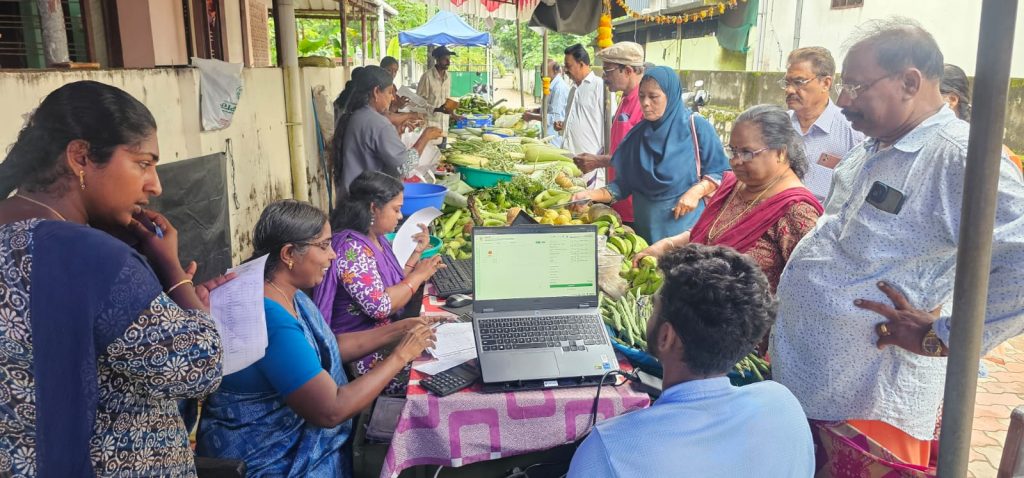
Speaking from the state-government perspective, Rajesh Krishnan, Department of Agriculture, Government of Kerala, highlighted the realities of delivering digital services across highly fragmented agricultural holdings.
Kerala’s experience with the Kerala Agriculture Technology Hub and Information Repository (KATHIR) demonstrates how bringing agricultural datasets together can enable services such as pest, irrigation and weather advisories. Rajesh Krishnan noted that around 13 lakh farmers were receiving such automated advisories at the time of the webinar.
His experience also highlighted a less visible challenge: data is often treated as an organizational asset, making it difficult to bring datasets together on a common platform. Building trust around data sharing is therefore as important as building the technology itself.
AI can make agricultural DPI more accessible
Neeraj Huddar, Product Manager and GTM Lead for DPI at Google and former Resident Fellow at NITI Aayog, emphasized that AI should ultimately help put the farmer at the centre.
A farmer interacts with multiple services across the agricultural journey – from inputs and crop management to credit, schemes, insurance and markets. AI can help simplify this complexity by allowing farmers to access relevant services through easier interfaces, including voice and local-language interactions.
AI can also transform how government officers interact with agricultural data. Instead of navigating multiple dashboards, officers could ask questions in natural language and receive relevant insights to support faster, data-driven decisions.
Interoperability and trust are foundational
For Nikhil Gupta, Head – AI & DPI Products at Protean eGov Technologies, agriculture requires a different DPI approach because it connects digital information with physical goods, services and outcomes.
Drawing from work around AgriStack, he highlighted the importance of foundational registries, APIs, sandboxes, federated data sharing and consent management in creating an ecosystem where different players can build and exchange value securely.
The objective is not to create another closed application, but infrastructure on which multiple agricultural services can be built.
Data could drive the next agricultural transformation
Dr. C. S. Murthy, former Director of MNCFC, described India’s emerging transformation as a shift towards data-centric agriculture.
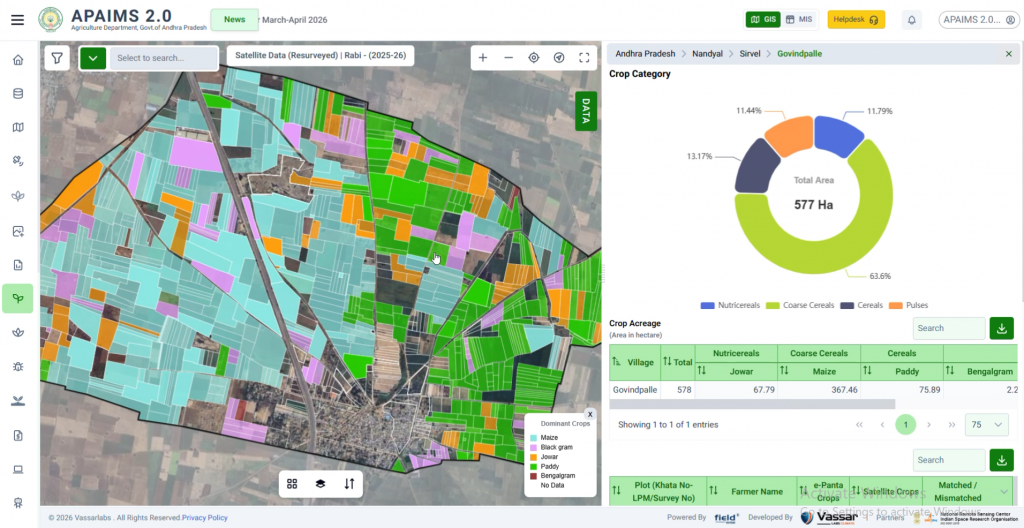
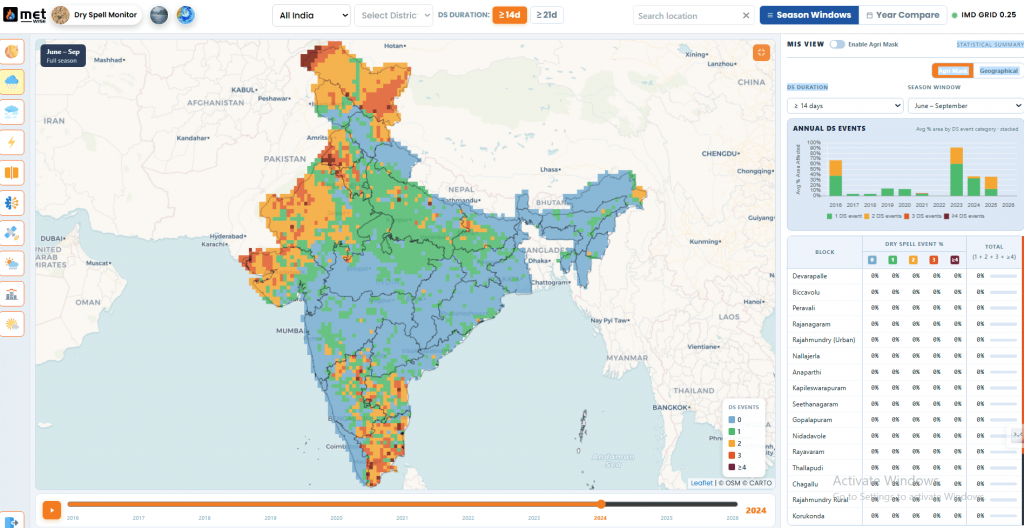
Agricultural decision-making still relies heavily on manual data and subjective information, while significant data gaps, inconsistencies and silos remain. At the same time, technologies such as satellite intelligence, geospatial analytics and AI are advancing rapidly.
The challenge, therefore, is not simply generating more data, it is creating the infrastructure required to connect, standardize, share and utilize it effectively.
For Dr. Murthy, adopting DPI principles can help address this systemic fragmentation, supported by appropriate policy and collaborative models.
Agriculture DPI must connect with water and climate
Prof. K. V. Jayakumar, Visiting Professor and Outreach Advisor at IIT Dharwad, brought another critical dimension into the conversation: water.
Agricultural management cannot be separated from water availability, irrigation, drought and climate variability. Effective decision-making requires understanding the complete chain, from water availability and distribution to the root zone and agricultural production.
This reinforces the need for agricultural DPI to integrate not just farmer and crop data, but also water, weather, soil and geospatial intelligence.
From infrastructure to real-world impact
Dr. Jella Satyanarayana, Project Head, SBI ARISA Lab, AgHub-PJTAU, presented a field-level view of how these technologies can come together.
His framework for agricultural DPI spans digital identity, data exchange, data infrastructure, farmer-facing services, financial integration and governance.
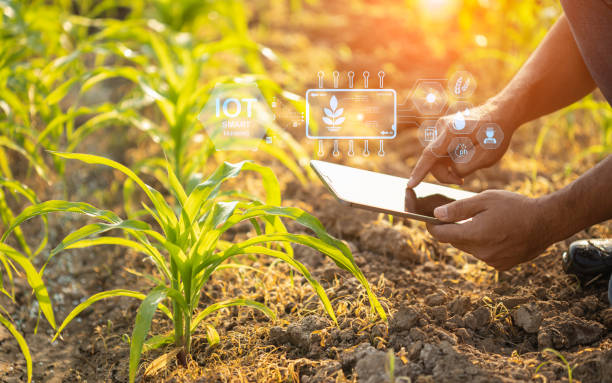
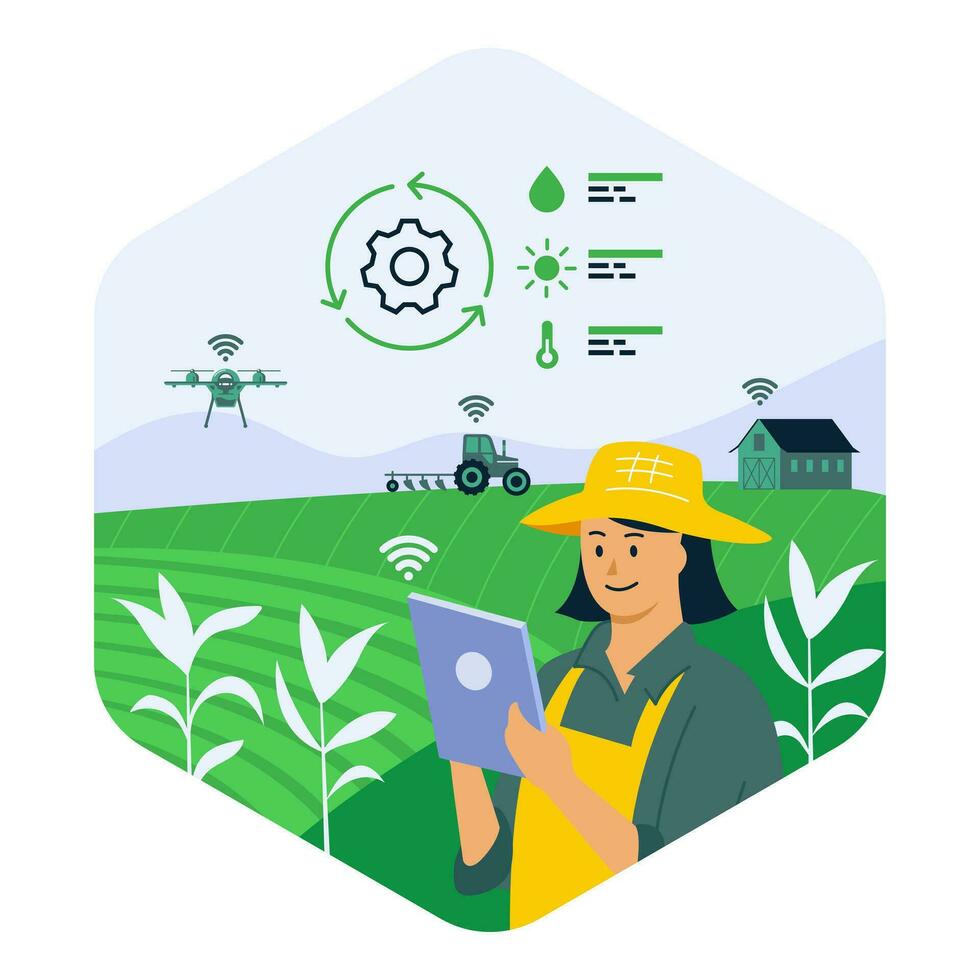
At SBI ARISA Lab, drones, robotics, IoT sensors, remote sensing and AI/ML are being integrated to generate actionable information for crop monitoring, pest alerts and agricultural decision-making.
The objective is ultimately to bridge research, technology and farmers and translate digital infrastructure into field-level outcomes.
What comes next?
The discussion revealed a common direction for India’s agricultural digital ecosystem:
DPI cannot be just about technology. It must be about connectivity, interoperability and outcomes.
The next generation of agricultural infrastructure will need to bring together:
- Trusted farmer and land identities
- Interoperable agricultural data
- AI and geospatial intelligence
- Weather, water and climate information
- Farmer-facing advisory and services
- Markets, finance and value-chain connections
- Strong governance, consent and data-sharing mechanisms
For Vassar Labs, this vision aligns closely with the work being undertaken through fieldWISE, which brings together AI/ML, satellite intelligence, remote sensing, weather, GIS, IoT, cloud and GenAI to support data-driven agricultural decision-making and service delivery.
The opportunity ahead is therefore larger than digitizing individual agricultural services.
It is about creating shared digital rails that connect data to intelligence, intelligence to decisions, and decisions to outcomes.
Further Reading
Related on this blog:
What Is Digital Public Infrastructure for Agriculture?
Why Every Indian State Needs Agriculture AI Policies
The Future of Fertilizer Distribution: From Supply-Driven to Need-Based