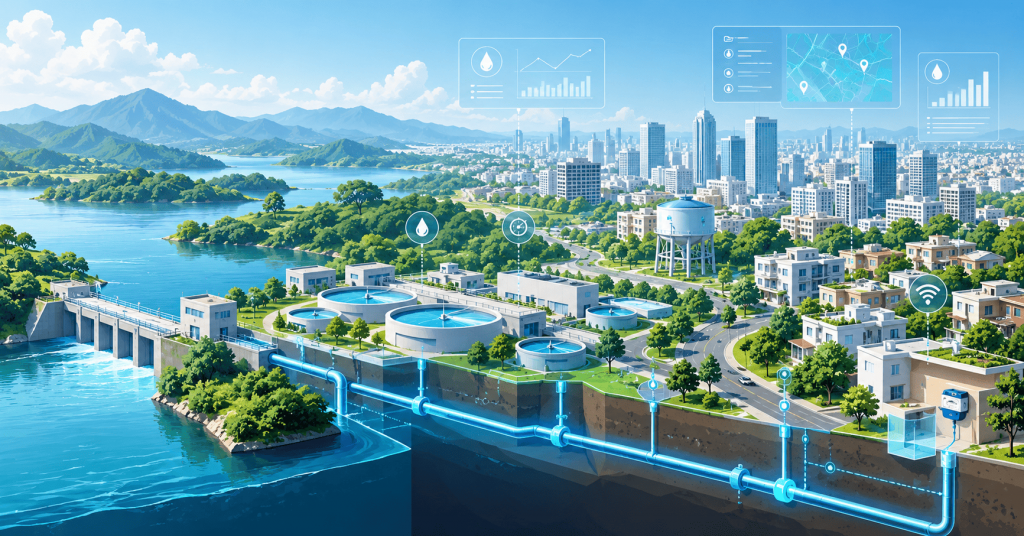
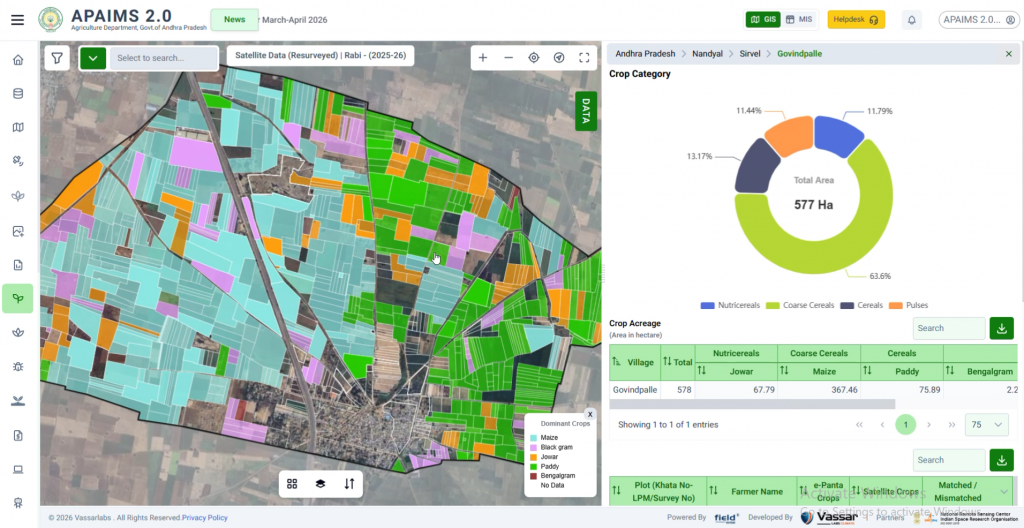
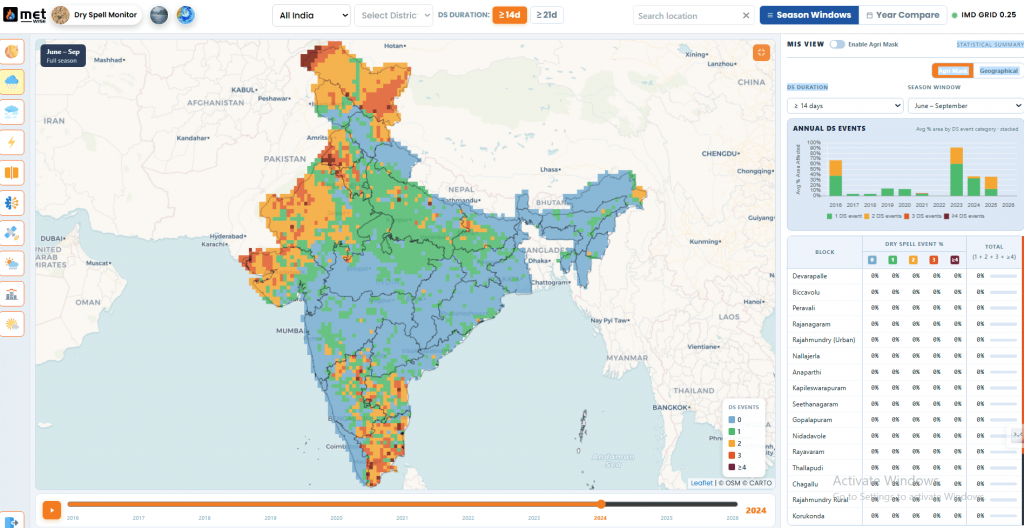
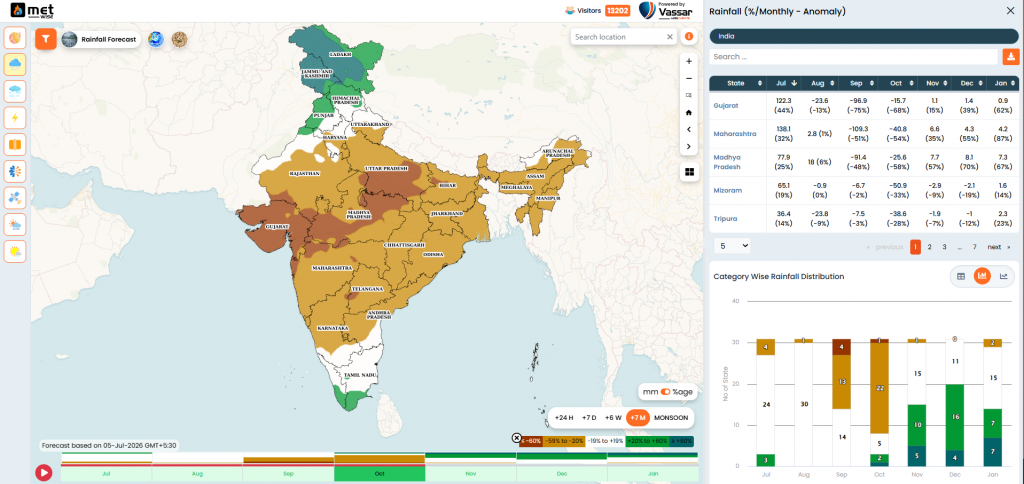
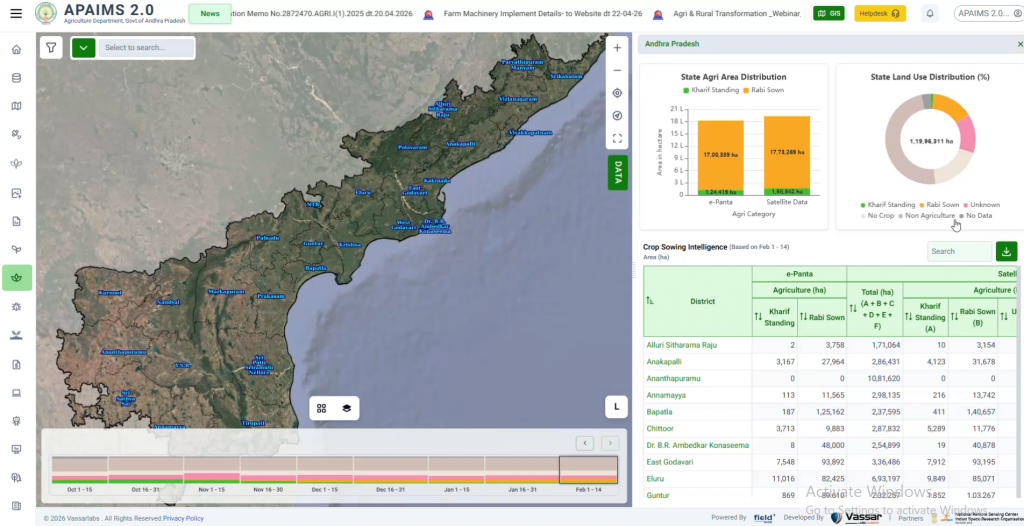
A digital twin serves as a virtual counterpart to a physical system, process, or product, allowing real-time monitoring, analysis, and optimization of its operations. This technology is gaining traction across industries like manufacturing, energy, healthcare, transportation, and construction. It lets organizations simulate and evaluate various scenarios virtually, minimizing expensive physical prototypes and trials. Digital twin frameworks are redefining how reservoir systems and dams are monitored, operated, and kept safe under rising climate and demand pressures.
Viksit Bharat 2047 aims for an industrialized, urbanized India with expansions in manufacturing, services, infrastructure, and energy, all demanding reliable water supplies. This requires enhanced irrigation for productive agriculture, continuous urban and industrial water, cooling/storage for thermal and renewable energy, and assured environmental flows. Projections indicate that by around 2050, domestic and industrial water demands could more than double while agricultural demand remains dominant but is expected to grow more slowly, together pushing total water demand up by roughly one third compared to current levels. Without strong allocation frameworks, sectoral competition for finite reservoir water intensifies, underscoring strategic dam management to avoid water stress.
Compounding this are ageing dams over 1,000 large ones past 50 years, 4,000 more by 2050 and sedimentation eroding 20–30% of live storage, slashing flood-buffering and supply reliability while heightening safety risks like reduced freeboard and structural stress. Amid climate variability and rising demands, end users/stakeholders need an integrated, predictive tool. Geospatial AI platforms like Vassar Labs’ aquaWISE fuse satellite data, sensors, SCADA, surveys, and socio-economic signals for holistic, multi-dam decision-making.
Reservoirs Problem
Reservoirs in water management face significant operational and environmental challenges that impact reliability and sustainability. Reservoirs struggle with uncertain inflows and demands due to climate variability, leading to issues like water scarcity, flooding risks, and inefficient allocation. Water quality degrades from sedimentation, eutrophication, thermal stratification, and pollution concentration during low inflows, harming ecosystems and supply. Structural concerns include aging infrastructure wear, operational faults, and sediment buildup that reduces storage capacity.
Climate‑Aware Reservoir Twins: From Design Storms to Operations (Digital Twin Solutions)
Digital twins offer targeted solutions by creating virtual replicas for simulation, prediction, and optimization. It enables real-time monitoring and scenario simulation, allowing operators to predict inflows, optimize releases for flood control, supply, and hydropower without physical risks. By integrating AI and data analytics, digital twins improve water quality management, reduce losses, and balance multi-objectives like ecosystem health amid climate shifts.
Operational digital twin of the reservoir network
The same framework powers a “one‑water grid” view where upstream and downstream reservoirs, rivers, canals, and lift schemes are represented as a connected network.
- Each reservoir is a node with live storage, inflow, and outflow; links represent gravity and lift transfers, canals, and river reaches.
- Real‑time and forecast levels, routed flows, and tank storages are visualised on maps with risk indicators and thresholds, turning raw data into situational awareness.
- Scenario simulations allow operators to test alternative pre‑monsoon drawdown strategies, coordinated releases across cascades, and different flood‑cushion policies before committing to a strategy on the ground.
This makes climate‑aware operation part of daily reservoir management, not a one‑time study.
Digital Twins for Allocation, Hydropower, and System‑Scale Safety
Beyond hydrology, digital twin frameworks must also reflect how dams are used to allocate water, run hydropower, and coordinate multiple structures across basins. In aquaWISE, reservoir operation rules are treated as dynamic policies connected to the twin rather than static curves.
- Rule curves are optimised to secure reliable supplies for irrigation, urban and industrial sectors, maintain flood buffers, meet environmental flows, and support hydropower generation.
- A Decision Making under Deep Uncertainty (DMDU) framework lets planners explore decisions across multiple futures, climate scenarios, hydrological variability, shifting demands, infrastructure constraints, and policy shifts before embedding them in operating rules.
For Telangana’s large lift‑irrigation system, the digital twin spans 37 major reservoirs and barrages, seven links, 28 lift and gravity conveyance packages, 21 pump houses (about 3,967 MW installed), 203 km of underground tunnels, 98 km of pressurised pipelines, and over 1,800 km of canals. - Forecast modules generate short‑ to medium‑range inflows, routed river flows, flood peaks, and sectoral demands which feed a multi‑objective, multi‑reservoir optimisation engine within the twin.
- The system supports annual irrigation demands of about 6,711 MCM, irrigating roughly 37 lakh acres, delivering drinking water to over 20 million people and providing around 16 TMC for industry—all while maintaining safety constraints on storage and releases.
The NIROWA dashboard for the Narmada basin uses 10‑daily optimisation across 14 reservoirs in four states, allocating approximately 34,537 MCM per year under NWDT rules and exploring low‑flow and dead‑storage scenarios through the twin.
Hydropower as an integrated service
Digital twins in aquaWISE treat hydropower as part of a coupled water–energy system, not a separate optimisation problem.
- Real‑time reservoir levels, inflows, demand forecasts, and power‑system signals feed optimisation engines that propose unit‑wise generation schedules and downstream release patterns while honouring environmental flows, ramping constraints, and operation manuals.
- Monsoon‑season modules help maintain flood cushion and minimise spills by routing surplus water through turbines as far as safely possible; post‑monsoon and lean‑season modes prioritise storage conservation, scaling back generation when irrigation and drinking‑water thresholds are at risk.
This integrated view improves both energy yield and system‑scale water and safety outcomes.
Climate‑driven loading and safety
In Andhra Pradesh, a long‑horizon climate study under APWRIMS 2.0 evaluates roughly 113 reservoirs across the state’s major basins.
- Downscaled and biased‑corrected Global Climate Models generate temperature and precipitation projections for early, mid, and late century under multiple SSP pathways.
- ETCCDI extreme indices (consecutive dry days, heavy and very heavy rainfall frequencies) quantify future changes in flood and drought behaviour.
- Design storms, PMP, and PMF are re-estimated for historical and future climates; storms of multiple durations and return periods are routed through calibrated catchment models to generate design hydrographs.
- Basin‑specific IDF curves for present and future climates provide a consistent basis to update PMP and PMF at each dam.
Within a digital twin, these climate‑aware loads sit alongside real‑time data, allowing dam safety engineers to test whether spillway capacities, freeboard, and operating rules remain adequate under projected extremes and to prioritise structural upgrades or operational changes where risk grows most.
Why Dams Need Digital Twins Now
India’s large dams are simultaneously facing changing inflow regimes, intensifying multi‑sector demands, and ageing structures with eroding safety margins. Conventional, siloed approaches, separate studies for hydrology, allocation, and dam safety, each based on static rule curves are not designed for this level of complexity and non‑stationarity.
A digital twin framework addresses this gap by creating a virtual, continuously updating replica of the dam–reservoir–river system that mirrors real‑world behaviour. In such a setup, climate projections, inflow forecasts, structural health signals, and downstream exposure are integrated into one decision environment, enabling predictive and system‑scale management rather than reactive crisis response.
What a Digital Twin for Dam Safety Looks Like
A digital twin for dam and reservoir safety is built on three tightly linked pillars: data integration, modelling, and operational intelligence.
- Unified data layer. Multi‑source data – satellite earth observation, in‑situ sensors, SCADA/telemetry, survey and inspection records, and demand data—are harmonised onto a common spatial and temporal grid across dozens or hundreds of assets.
- Scientific and AI models, Basin hydrological models, 1D/2D hydraulic and flood models, reservoir simulation and optimisation, inflow forecasting, irrigation and crop‑water models, water‑quality and anomaly detection, and decision co‑pilots run on top of this integrated data fabric.
- Decision support and workflows. Outputs are surfaced through map‑based dashboards, KPIs, alerts, and workflows that link analytics to daily operational decisions and long‑term planning.
- A core requirement for any dam digital twin is to embed climate resilience directly into both design checks and operations.
In aquaWISE, this is implemented as a layered architecture: a secure technology backbone (time‑series engine, AI/ML framework, geospatial engine, digital twin framework, workflow services, APIs), a rich modelling layer, and an application layer that exposes reservoir operations, water‑grid views, flood management, and dam‑safety tools to managers.
Ageing Dams, Subsidence, and InSAR‑Enabled Safety Twins
Ageing infrastructure and subtle structural movements are critical dimensions of dam safety that digital twins can capture in ways conventional inspections cannot.
- Many reservoirs have lost 20–30% of live storage due to sedimentation, reducing flood buffers and increasing the likelihood of overtopping or spillway stress during extremes.
- Cyclic reservoir filling and drawdown alter effective stresses and pore pressures in embankment and rockfill dams, causing small, often irreversible deformations that accumulate over decades.
aquaWISE integrates an InSAR‑driven satellite deformation module directly into the dam digital twin. - Time‑series stacks of SAR images are co‑registered and processed interferometrically to derive phase changes, which are converted into line‑of‑sight displacements and decomposed into vertical and along‑slope components.
- These high‑resolution deformation fields are fused with structural instrumentation and hydrological data in the same analytics environment, enabling engineers to pinpoint zones of abnormal crest settlement or slope movement associated with specific filling–drawdown episodes.
- The twin can then support prioritization of detailed inspections, maintenance, or operational adjustments – such as modified drawdown rates or revised allowable levels—on a targeted, risk‑based basis.
This ageing‑aware layer transforms the digital twin into a continuous early‑warning and planning tool rather than an after‑the‑fact reporting system.
From Pilot Projects to a National Safety Fabric
Perhaps the most important shift that digital twin frameworks enable is one of scale. India manages thousands of dams and tens of thousands of medium and minor storage structures; manually building and maintaining bespoke models for each is neither feasible nor sustainable.
- Integrated platforms like aquaWISE allow rapid configuration and replication of standardised yet locally adaptive digital twins across large portfolios of dams, reservoirs, canals, and tank networks.
- Automated data ingestion, AI‑assisted calibration, and reusable optimization and risk modules cut down deployment time and reduce dependence on one‑off engineering studies.
- State‑scale deployments such as APWRIMS, NIROWA, and TNWRIMS illustrate that such frameworks are not theoretical—they are already institutionally embedded as operational decision‑support layers.
In this sense, digital twin frameworks for reservoir and dam safety management are becoming the backbone of a new, AI‑enabled water‑infrastructure intelligence layer. They provide the visibility, predictive power, and scalability required to keep aging dams safe, meet growing multi‑sector demands, and navigate a rapidly changing climate with confidence.