
Across India’s water-stressed regions, a familiar pattern emerges during every monsoon and cyclone season: fragmented data, delayed decisions, and cascading infrastructure failures. The result is reactive crisis management rather than proactive preparation—and lives lost that could have been saved.
This wasn’t always understood as a systemic problem. For decades, India’s approach to water governance and disaster preparedness treated it as a technology challenge: build better sensors, collect more data, improve forecasting models. But decades of cyclones, floods, and water crises revealed a deeper truth: the problem wasn’t data scarcity. It was information fragmentation.
Cyclone Hudhud’s October 2014 strike on Andhra Pradesh exposed critical vulnerabilities in the state’s fragmented water and disaster management systems.It clearly shows that traditional infrastructure was not adequately prepared to handle the region’s recurring cyclonic threats. The cyclone had not only claimed 61 lives and injured 43 others, but also affected 20.93 lakh families across the state. Across four coastal districts, approximately 9.2 million people in over 7,285 villages were impacted. The damage was catastrophic: over 2,250 kilometers of roads were destroyed, 45,000 electrical poles needed replacement, and it took weeks to restore basic services and communication lines.
The fundamental problem wasn’t a lack of effort from government agencies. Rather, it was a crisis of data silos. Water resource managers operated in silos – those monitoring reservoirs had no real-time visibility into minor irrigation tank conditions; rainfall data arrived in fragments from disconnected stations; satellite observations existed but weren’t integrated into decision-making workflows; and crucially, there was no unified platform that could translate raw environmental data into actionable intelligence for field coordinators and state command centers.
When early warnings arrived, they came too late or lacked the granularity needed for precision response. Evacuation decisions relied on broad forecasts rather than hyper-localized risk assessments. Water release schedules from reservoirs couldn’t account for real-time rainfall changes across upstream catchments. Field teams lacked visibility into tank overflow risks, leading to reactive rather than proactive interventions. The 2014 response, while saving many lives through manual coordination, exposed a painful truth: data existed, but knowledge was absent.
The state government recognized that building resilience required something fundamentally different – not just better equipment, but an entirely new paradigm for how water, weather, and disaster information flowed through governance. There are many studies which have been performed in similar cases and few of them are also discussed below:
Literature Review:
To mitigate these risks, integrated adaptation strategies are essential. These include the development of localized early warning systems informed by oceanic and atmospheric monitoring, the promotion of drought- and heat-tolerant crop varieties, and the adoption of efficient AI water management practices such as rainwater harvesting and drip irrigation (Islam et al. 2025) .Piezometric depth modeling for the Sarab Plain aquifer uses monthly precipitation and water consumption variables to predict groundwater levels. This approach, detailed in a 2024 study by S. Khosravi, innovates by integrating both recharge (precipitation) and abstraction (water consumption) factors simultaneously, unlike prior models focusing on one variable. Borankulova et al. 2025 presented a paper on a solar-powered IoT-based real-time water-level monitoring system designed to improve irrigation efficiency and water management in Kazakhstan’s agriculture. It integrates multi-parameter sensors and cloud analytics to support sustainable water use and informed decision-making. Bioresita et al. 2018 proposed a robust, automatic method for rapidly mapping water surfaces from single Sentinel-1 SAR images using adaptive thresholding on backscatter data, enhanced by fuzzy logic, region growing, and bimodality tests to reduce errors from low/high-backscatter areas. Validated across diverse sites, it achieves high accuracy (e.g., ~90% user’s/producer’s) and supports scalable applications like flood/drought monitoring, outperforming simpler thresholding in urban/complex terrain. It can be inferred from the above studies that the early warning system is essential for any disaster in addition to it, an integration of groundwater system , sensor and IoT water management will help in efficient future prediction. A well developed robust method is also essential in mapping water surface.
The Digital Transformation: APWRIMS 2.0 Emerges
Recognizing that India’s water security demanded innovation aligned with the Digital India vision and Jal Shakti mission, Andhra Pradesh launched APWRIMS (Andhra Pradesh Water Resources Information and Management System) in 2017 as a foundational step. Built on the aquaWISE technology stack developed by Vassar Labs, APWRIMS represented India’s first state-scale Digital Public Infrastructure (DPI) for integrated water resource management.
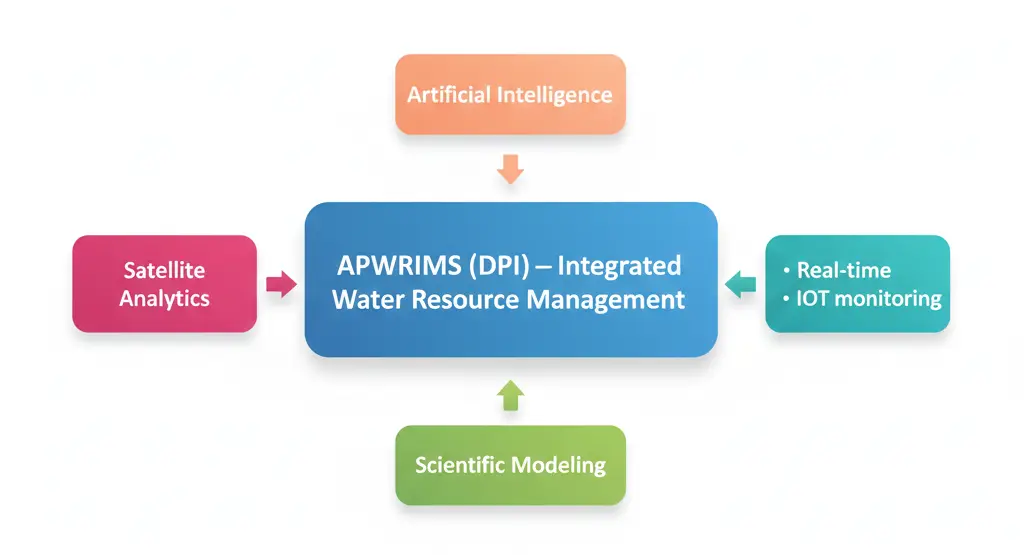
Figure 1: APWRIMS an Integrated Water Resources Management System
But APWRIMS was not just a database. It was a fundamentally new approach to governance- one that fused AI, real-time IoT monitoring, satellite analytics, and scientific modeling into a unified decision-support ecosystem as shown in Figure 1. Unlike traditional systems that stored historical data, APWRIMS created a living digital twin of Andhra Pradesh’s entire water system: from the 31,000+ minor irrigation (MI) tanks scattered across the state to over 100+ reservoirs, from 2,000+ rainfall monitoring stations to groundwater conditions across 17,334 villages as shown in Figure 2.
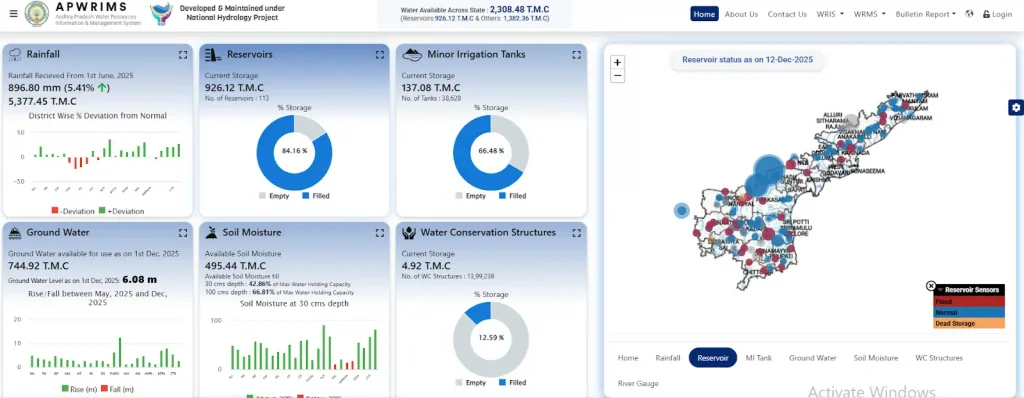
Figure 2: APWRIMS a digital twin of AP entire water system
The platform’s architecture reflected a crucial innovation: it wasn’t designed for a single use case. Instead, it operationalized multiple critical functions simultaneously:
Real-Time Visibility at Scale: APWRIMS integrated data from 2,000+ rainfall stations across the state, 155 automatic water level sensors deployed in reservoirs and major water bodies, 1,800 piezometers tracking groundwater, and satellite-based water spread detection across all 38,000 minor irrigation tanks using ESA’s Sentinel-1 satellite imagery and deep learning models The Reservoir, MI tanks and Rainfall module are shown in Figure 3,4 and 5 respectively.

Figure 3: Reservoir Module of APWRIMS

Figure 4: Reservoir Module of APWRIMS

Figure 5: Rainfall Module of APWRIMS
AI-Powered Early Warning Generation: Rather than waiting for emergencies, the platform generated three-hourly alerts on MI tank water levels and overflow risks, coupled with twice-daily forecast-based advisories that predicted floods and droughts 7 days in advance by fusing rainfall forecasts with hydrological simulations. For reservoirs, continuous monitoring ensured 24×7 situational awareness of storage levels and inflow trends.
Decision-Ready Intelligence: An AI-enabled dashboard consolidated alerts from tanks, reservoirs, weather systems, and cyclone tracking models, translating technical data into plain-language advisories that field officers and command centers could act on immediately.
Governance with Accountability: Each AI module operated within a structured accountability framework, co-managed by the Andhra Pradesh Water Resources Department and Vassar Labs, ensuring transparency and ethical deployment of AI in public service.
By 2024, the system had matured into APWRIMS 2.0, with more sophisticated modules including Nowcast integration for real-time cyclone tracking and the emerging GenAI Copilot for conversational water intelligence. The platform supported 1,000+ users from over 10 stakeholder departments, from state control rooms to district collectors, from field engineers managing minor irrigation schemes to agricultural officers coordinating crop stress management. Across three years, the system attracted over 23 lakh visitors, demonstrating widespread institutional adoption and trust.
When Crisis Tested the System: Cyclone Montha and the Power of Real-Time Intelligence
On October 28-29, 2025, the power of this digital transformation became unmistakably clear. Severe Cyclonic Storm Montha made landfall near Narasapuram in Andhra Pradesh with wind speeds reaching 90-110 km/h at the coast, unleashing torrential rainfall and threatening to repeat the devastation of Cyclone Hudhud more than a decade earlier. This time, however, the response was fundamentally different. As Montha approached, APWRIMS powered critical early warnings and operational action across multiple dimensions:
Hyper-Localized Risk Intelligence: The digital public infrastructure of water identified exactly 5 reservoirs and 1,307 MI tanks in cyclone-affected regions that were at elevated risk – not a broad warning for all 31,000+ tanks, but precision-targeted alerts based on real-time water levels, rainfall projections, and structural vulnerability profiles. This specificity allowed district collectors and field engineers to focus protective measures where they mattered most.

Figure 6: Observed rainfall over the past 24 hours

Figure 7: Rainfall from 28th Oct to 29th Oct
Continuous Situational Awareness: Throughout the cyclone event, APWRIMS delivered:
– Real-time cyclone path tracking and rainfall intensity projections integrated with Nowcast meteorological models
– Satellite-based water-spread analysis updated with high temporal frequency (every 5-10 days or post-rainfall) to assess actual tank storage conditions and identify potential breaches even under cloudy conditions
– Three-hourly automated alerts on rising water levels, overflow risks, and structural stress for all monitored water bodies
– Twice-daily forecast-based advisories projecting tank and reservoir conditions 48-72 hours ahead

Figure 8: Showing Montha at state level (a), district level (b), mandal level (c), tank level (d)
Coordinated Field Operations: The platform enabled real-time coordination between the State Control Room, Chief Engineers (CEs), Superintending Engineers (SEs), and Division Engineers (DEs) across all four irrigation regions. Rather than each official operating with incomplete information, they accessed a unified command dashboard showing:
– Priority tanks and reservoirs requiring immediate intervention (water releases, spillway operations, or emergency preparedness)
– Live rainfall intensity maps overlaid with tank locations and capacity thresholds
– Recommended water release schedules for reservoirs to prevent catastrophic spilling while maintaining supply to downstream command areas
– Status updates on field teams and interventions already underway
Decision Support in Real Time: The system generated automated advisory bulletins dispatched to CEs, EEs, and DEs at critical moments, translating complex hydrological data into actionable recommendations such as “Release 500 cusecs from Reservoir X within 2 hours to prevent spillway activation,” or “Tank Y has reached 95% capacity; mobilize field teams for emergency spillway maintenance.”
The measurable impact was stark. According to initial reports and government acknowledgment, zero human fatalities occurred directly attributable to cyclone-related water disasters in the regions under APWRIMS water monitoring. While Cyclone Montha caused an estimated 53 billion rupees (approximately $603 million USD) in total damage across Andhra Pradesh, the vast majority was from agricultural losses and wind damage to infrastructure – not from uncontrolled flooding, tank breaches, or cascading water-related emergencies.
Recognition from Government and the National Narrative
The effectiveness of APWRIMS and its use cases were deeply appreciated not only in AP but also across other states. In the aftermath, AP Water Resources Department’s Joint Director Shri Srinivasu extended special appreciation to the Vassar Labs team for their dedication and continuous support throughout the cyclone period, specifically acknowledging the platform’s critical role in strengthening the state’s disaster response capability.
Chief Minister Shri N. Chandrababu Naidu and the state government formally recognized the platform’s contribution to minimizing overall damage through coordinated preparedness measures. News coverage in major outlets including the Eenadu newspaper, dated October 29, 2025 documented the state government’s reliance on APWRIMS data and its role in command center decision-making during the crisis as shown in Figure 6.

Figure 9: Eenadu Newspaper news coverage
This recognition was more than symbolic. It reflected a governance transformation for the first time in a major disaster event, a state-scale DPI for water management had proven its value in real operational conditions – not in pilot projects or controlled settings, but under the most demanding circumstances imaginable: a severe cyclone affecting millions of people and thousands of critical infrastructure points.
The Montha response also captured national attention as a case study in how modern governance should work during natural disasters : real-time data flowing seamlessly from sensors to command centers, AI translating complexity into clarity, multiple agencies coordinating through shared intelligence rather than operating in isolation, and critically, preventive action replacing reactive crisis management .
When Disaster Preparedness Technology Becomes Governance
The arc as shown in Figure 7 from Cyclone Hudhud to Cyclone Montha, from fragmented emergency response to coordinated real-time action, tells a story about the future of governance in a climate-changing world. It is not ultimately a story about technology- sensors and satellite data and machine learning algorithms are tools. Rather, it is a story about how those tools can be assembled into systems that fundamentally change what governments can know and what they can do.

Figure 10: Development of Technology and information from Cyclone Hudhud to Cyclone Montha
Andhra Pradesh’s experience with APWRIMS 2.0 demonstrates that modern governance in the age of climate uncertainty requires three elements working in concert :
1. Real-time environmental monitoring at scale (thousands of sensors, satellite data, weather forecasts) that creates a continuous digital model of the physical world.
2. AI and scientific modeling that translates raw observations into predictions and recommendations, and does so at the speed and scale humans cannot match.
3. Institutional coordination frameworks that ensure this intelligence reaches decision-makers, field teams, and communities in time for action.
When Cyclone Montha struck, APWRIMS proved that these elements, properly assembled, can save lives, protect livelihoods, and minimize cascading failures in critical infrastructure. The platform’s success during the crisis was not an exception but evidence of what becomes possible when governance infrastructure is designed for the 21st century – when data, intelligence, and decision-making are integrated into a seamless whole.
As climate change intensifies water-related hazards, similar systems will become standard practice, not cutting-edge innovation. The question is no longer whether states should build platforms like APWRIMS, but how quickly they can do so, how widely they can deploy them, and how effectively they can use them to protect and serve their citizens.
Andhra Pradesh’s journey from the devastation of Cyclone Hudhud to the coordinated resilience demonstrated during Cyclone Montha offers the world a template: for how to govern water in an age of uncertainty, for how to make AI serve public good rather than perpetuate fragmentation, and for how to build the institutional infrastructure that allows communities to not merely survive disasters, but actively prepare for them.
Results
It can thus be summarized that APWRIMS has been an integrated platform which can thus be helpful during cyclones and other disasters. This platform helped in automated advisory bulletins generation at critical moments There were zero human fatalities related to disasters under APWRIMS real-time water monitoring. It also helped in reducing the impact on tanks which reduced the pressure on the entire water system: from the 31,000+ minor irrigation (MI) tanks scattered across the state to over 100+ reservoirs, from 2,000+ rainfall monitoring stations to groundwater conditions across 17,334 villages.
Client Name: Andhra Pradesh Water Resource Department
Area: Andhra Pradesh